D.I.V.E Forum 2026
April 25-26, 2026
Shanghai Jiao Tong University
Shanghai Jiao Tong University
| Home | Registration | Program | Directions |
The forum sessions will take place in the Report Hall, the MATE competition will be held at the Natatorium, and the First-Floor Exhibition Hall will host the WBCD Exhibition throughout the event.
| Date | Time | Report Hall | Natatorium | First-Floor Exhibition Hall |
|---|---|---|---|---|
| April 25 | 09:00–09:30 | Opening Ceremony | Team Testing and Debugging | WBCD Exhibition Open All Day |
| 09:45–10:30 | Talk by Prof. Mu Yao |
|||
| 10:30–11:15 | Talk by Prof. Zhongyu Li |
|||
| 11:15–12:00 | Talk by Dr. Zipeng Dai |
|||
| 13:30–14:15 |
Student Forum 13:30 Wang Xi 13:45 Jinghui Wang 14:00 Shaohua Deng |
|||
| 14:15–15:00 |
Talk by Prof. Boyu Zhou |
|||
| 15:00–15:45 |
Talk by Dr. Chenjia Bai |
|||
| 16:00–16:45 |
Talk by Prof. Han Zhang |
|||
| 16:45–17:45 |
Student Forum 16:45 Yankai Xiang 17:00 Yang Zhang 17:15 Wendi Chen 17:30 Jinhua Lu |
|||
| April 26 | 09:00–09:10 | MATE Poster Session | Remarks by Shanghai Jiao Tong University | WBCD Exhibition Open All Day |
| 09:10–09:20 | Remarks by MATE Executive Board |
|||
| 09:20–09:30 | Judges’ Briefing on Competition Rules and Notes |
|||
| 09:30–16:00 | Competition | |||
| 16:00–16:30 | Results Announcement | |||
| 16:30–16:45 | Award Ceremony | |||
| 16:45–17:00 | Group Photo |
The following invited talks cover trajectory planning, aerial embodied intelligence, humanoid intelligence, and embodied AI.
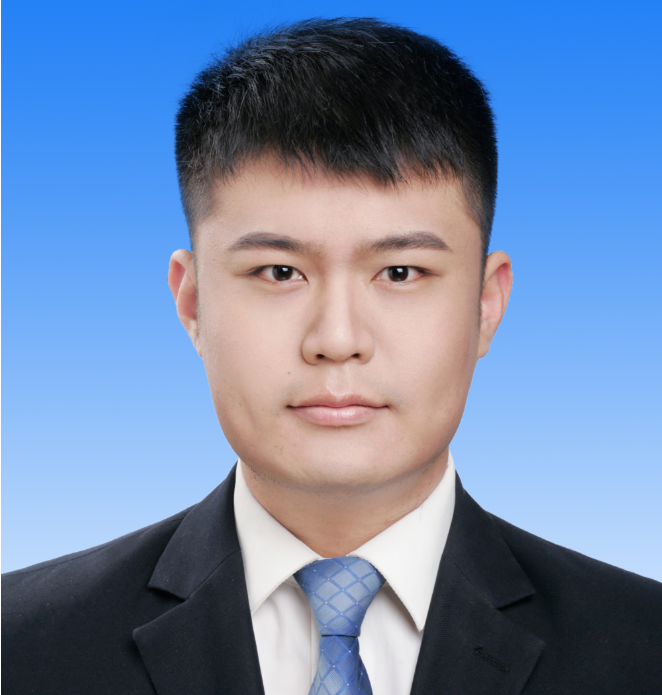
This talk focuses on large-scale parallel embodied learning driven by generative simulation. Against the emerging trend of embodied intelligence evolving toward self-improving systems, it presents a complete technical pipeline ranging from diverse scene and asset generation, embodied simulation and data engine construction, to progress-evaluation foundation models, discrete diffusion VLA models, and joint optimization with reinforcement learning. Through case studies in long-horizon embodied manipulation agents and fine-grained laboratory tasks, the talk shows how generative simulation can continuously amplify data scalability, training automation, and capability evolution, offering new paths and new paradigms for the next generation of embodied intelligence systems.
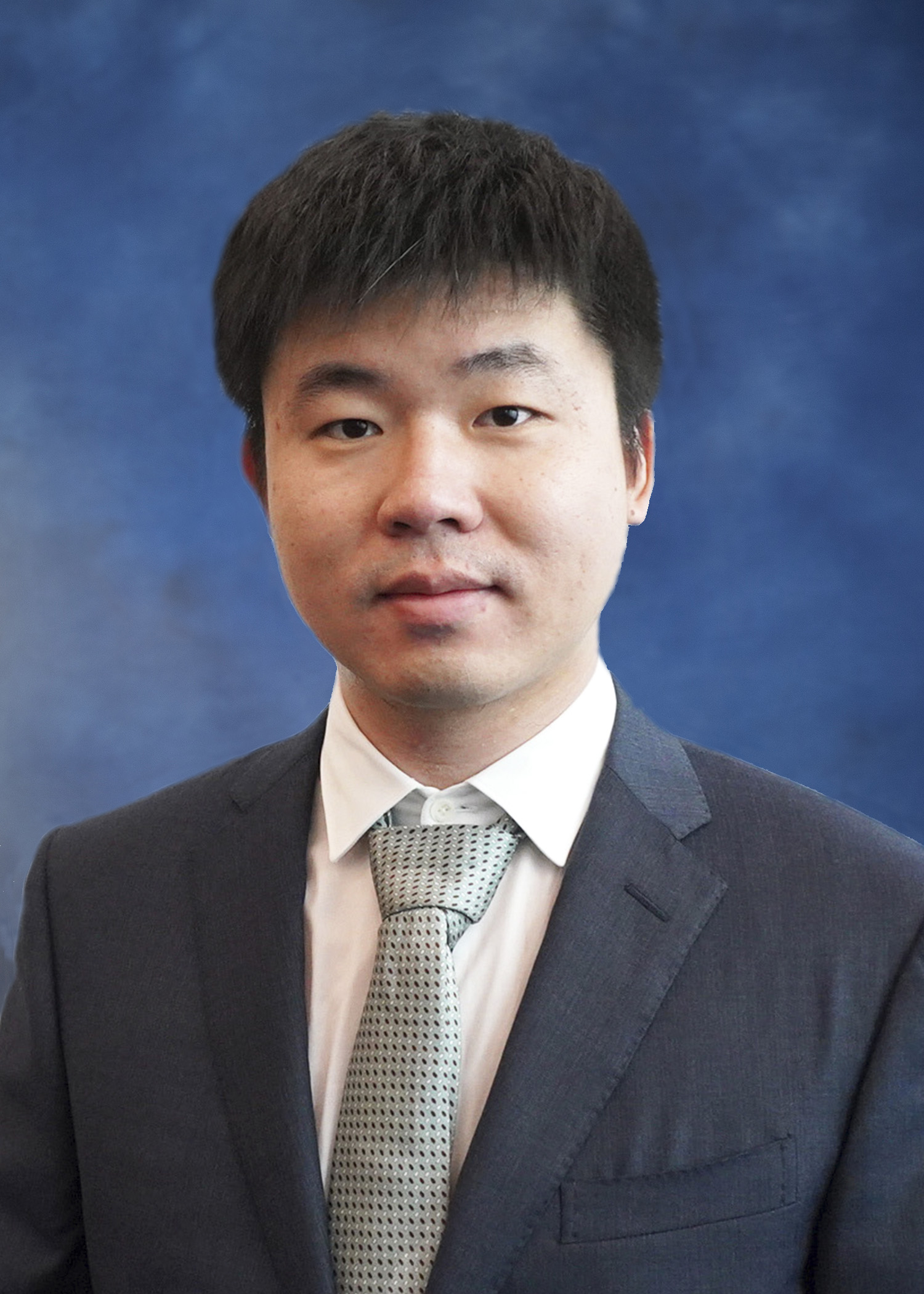
Bipedal humanoids have the potential to transform work in human environments, but many core challenges remain unresolved. This talk first revisits our earlier work on unlocking the agility of legged robots through reinforcement learning. We developed a generalized motion-tracking control framework that enabled bipedal robots to execute a wide range of highly dynamic skills, including targeted standing jumps, running a 400-meter dash, and traversing challenging terrain. This line of work helped catalyze recent RL-based humanoid locomotion controllers built on motion imitation. We then extended these capabilities beyond locomotion to support intelligent loco-manipulation and multi-agent interaction, pushing legged robots toward more functional real-world behavior. Conceptually, this line of research addresses the problem of the robot cerebellum: controllers that provide robust, adaptive, and athletic mobility. Building on this foundation, the talk introduces our current work at CUHK, where we aim to move from robot cerebellum to robot brain by using multimodal data to endow humanoid robots not only with dynamic locomotion, but also with generalizable whole-body manipulation, task-level reasoning, and safe, interactive intelligence.
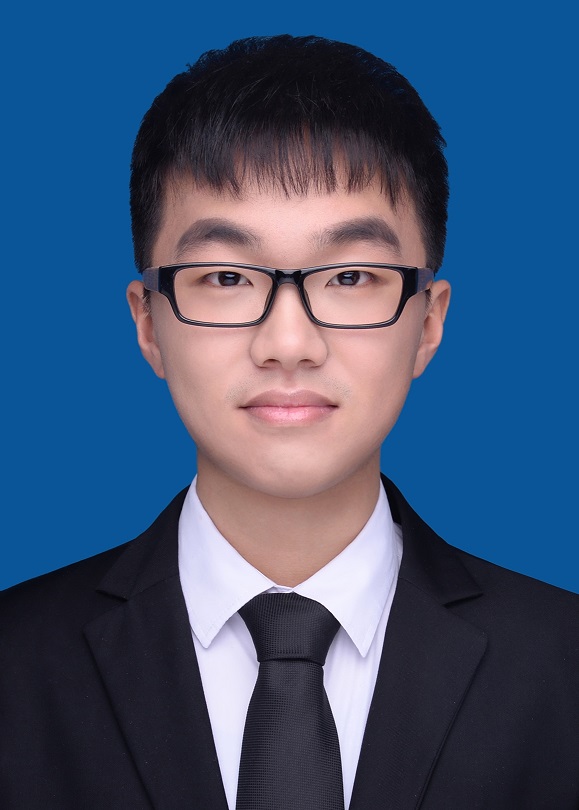
Centered on the theme of open-source, deployment, and real-world application, this talk reviews the team's exploration from the FAST Lab stage to its engineering and industrial development at Differential Robotics. It summarizes a line of work on autonomous UAV flight, end-to-end control, perception and decision making in complex environments, and reflects on how these efforts evolved from academic research into deployable systems. A key lesson is that the core of aerial intelligence does not lie in isolated algorithmic advances, but in the closed-loop unification of perception, planning and control, decision making, world modeling, and real-system deployment. Based on this perspective, the talk outlines a practical path through which aerial embodied intelligence can move from laboratory validation to real-world use.
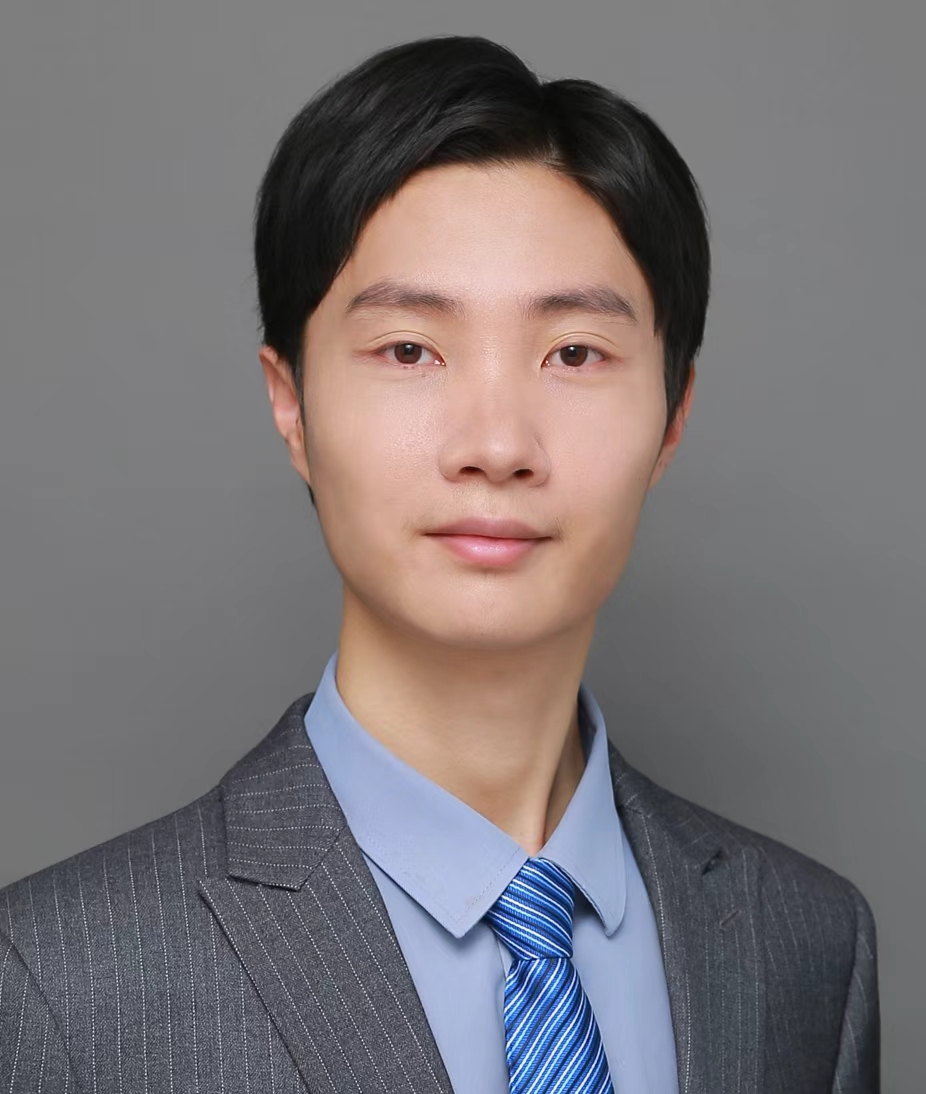
Robotics is entering a new stage in which data-driven methods and foundation models are deeply integrated, forming a key driver of advances in robot autonomy, while fine manipulation and complex interaction in real environments are increasingly important. This talk focuses on aerial embodied intelligence and presents a systematic line of explorations from autonomous navigation to higher-level capabilities. At the navigation level, it discusses how generative models improve perception in challenging environments such as glass and mirror scenes, enabling robust flight. For exploration in unknown environments, it introduces a lightweight scene representation and efficient planning framework for large-scale exploration. It then shows how vision-language foundation models support zero-shot UAV navigation, object-goal navigation, and on-the-fly 3D scene scanning. Finally, the talk discusses applications of whole-body planning in aerial load transportation systems and high-speed mobile manipulation.
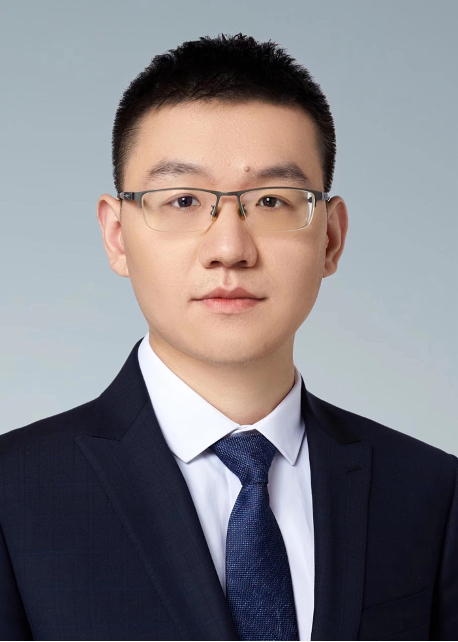
This talk discusses a collaborative “brain-and-cerebellum” capability foundation for general embodied intelligence and presents the TeleAI team's work on building embodied agents with both cognitive decision-making and motion control abilities. On the cerebellum side, the team has developed a high-dynamic whole-body motion control framework in the KungfuBot series, enabling text-driven real-time motion generation, adaptation to complex environments, soccer skills, and robust human-robot interaction. These efforts go beyond traditional control in dynamic balance and multimodal interaction. On the brain side, the team has proposed the PRTS vision-language-action foundation model based on contrastive reinforcement learning, built the GN-0 end-to-end embodied navigation framework that unifies map-based and map-free navigation, and developed the ATE cross-embodiment transfer method to improve VLA generalization across different robot platforms. To support this foundation, the team has also created the TeleSim high-fidelity simulation data platform, a weakly embodiment-dependent data collection system, and a matrix of full-size and compact humanoid platforms in the TeleBot series. The system has been validated in scenarios such as guidance, transportation, and fine-grained manipulation, providing an integrated solution from data and models to embodied platforms.
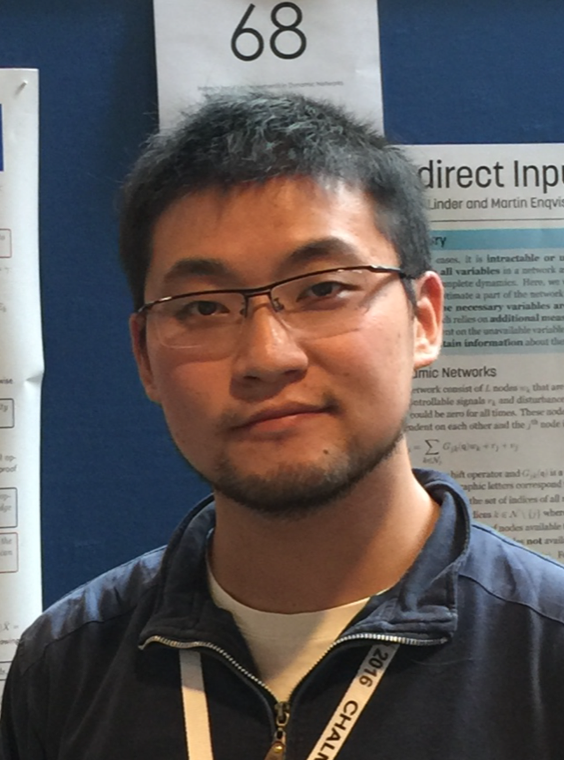
The core problem of trajectory planning can be understood through three tightly coupled questions: what to plan for, what information to plan with, and how to solve the resulting problem efficiently. This talk presents our recent studies and reflections on trajectory planning for robots and intelligent vehicles along the line of objective functions, feedback, and solution methods. First, on objective design, the talk discusses how Inverse Optimal Control (IOC) can be used to recover latent task goals and trade-off mechanisms from expert behavior or historical data, reducing the need for manually crafted cost functions and making planning better aligned with task requirements and real behavior patterns. Second, on feedback construction, the talk combines SLAM and environment perception to show how localization, mapping, and scene understanding can provide reliable state feedback and environmental constraints, turning planning from offline geometric generation into perception-driven closed-loop decision making. Finally, on solution methods, the talk introduces two representative optimization frameworks: one for planning under uncertainty, where safe trajectory generation must cope with perception error and environmental uncertainty, and another for motion planning of articulated vehicles on curved roads using warm-start techniques. Overall, the talk argues that high-quality trajectory planning is not merely a numerical optimization problem, but a system problem that deeply couples goal learning, environmental feedback, and real-time solving.
The student forum is divided into two sessions on April 25.
| Time | Speaker | Topic |
|---|---|---|
| 13:30 | Wang Xi | Fines:机器人中间件开发范式 |
| 13:45 | Jinghui Wang | FineNav: 下一代通用自主导航开发引擎 |
| 14:00 | Shaohua Deng | 空间计算赋能多场景具身智能 |
| Time | Speaker | Topic |
|---|---|---|
| 16:45 | Yankai Xiang | URDF Studio:重构具身机器人建模工作流的开发者平台 |
| 17:00 | Yang Zhang | PRTS: 重构具身VLA预训练的价值感知基座模型 |
| 17:15 | Wendi Chen | RoboPocket:用手机即时改进机器人策略 |
| 17:30 | Jinhua Lu | BESTAnP: Bi-Step Efficient and Statistically Optimal Estimator for Acoustic-n-Point Problem |